Outdoor Soaking by Design
Soaking under open sky—surrounded by crisp pine air, falling snow, or evening stars—is often the centerpiece of a cabin stay. However, an outdoor hot tub or cold plunge exposed to sub-zero winds, falling needles, and heavy structural loads can quickly become an energy drain or maintenance headache if poorly sited.
1. Structural Foundations, Decking Recesses & Access Panels
Standard residential timber decks are typically engineered for a live load of roughly 1.9 kPa to 2.9 kPa (40 to 60 lbs per square foot). A compact 1.8-meter outdoor soaking tub filled with 1,200 liters of water and four adults concentrates nearly 1,850 kg (over 4,000 lbs) onto a footprint of just 2.5 square meters—exceeding 7.2 kPa (150 lbs per square foot).
Rather than placing a heavy tub directly onto an existing elevated deck, experienced cabin planners use one of two safer approaches:
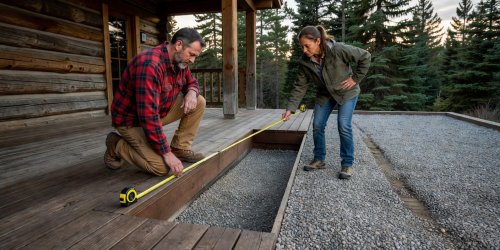
- The Recessed Ground Pad with Surrounding Deck: Pour a reinforced 150 mm concrete slab or compacted 200 mm angular crushed granite pad directly on undisturbed soil below frost line, set the tub on this independent pad, and frame the timber deck around the tub so the rim sits at a comfortable 450 mm step-over height.
- Removable Service Hatches: Whenever recessing a tub into a deck, build lift-out timber deck hatches on at least two sides so you can reach drain valves, circulation pumps, and firebox cleanouts without dismantling deck boards.
Factual Strip: Outdoor Tub Benchmarks
2. Comparing Cabin Heating & Tub Systems
| Tub Type | Heat Source & Warm-Up Time | Water Care & Power Needs | Best Cabin Use Case |
|---|---|---|---|
| All-Wood Stave Tub (Cedar / Thermowood) | Submerged or external marine aluminum wood-fired stove (2.5 to 3.5 hours from cold) | Zero electricity required; drained after 1–2 uses or paired with a small sand filter; must stay wet or humid in summer to prevent stave shrinkage | Off-grid cabins with abundant dry hardwood firewood and spring/well water supply |
| Wood-Clad Tub with Acrylic/PP Liner | External wood stove + backup 3 kW electric thermostat heater | Non-porous liner wipes clean in 10 minutes; never leaks if left empty between winter weekend stays | Weekend personal cabins and low-turnover retreats needing fast hygiene turnaround |
| Insulated Heat-Pump Soaking Tub | Air-source inverter heat pump + full foam cabinet insulation (maintains 38°C continuously) | 240V 32A–50A GFCI circuit; continuous UV/ozone + bromine or chlorine sanitation | Frequent-use retreats where guests expect instant soaking without tending a fire |
3. Wind Screening, Freeze Protection & Greywater Stewardship
Evaporative heat loss from a water surface doubles when wind speed increases from calm to just 15 km/h. Position your tub in the lee of the cabin structure or install a slatted timber windbreak screen on the prevailing wind side while leaving the view side open. Top every outdoor vessel with a marine-grade insulated vinyl or cedar-clad foam cover rated at R-14 or higher.
Winter Freeze Protocols
In wood-fired tubs without continuous electric freeze protection, trapped water inside external thermosiphon stove jackets or bottom drain valves will freeze and split aluminum welds overnight at -5°C. Install large-bore 50 mm quarter-turn ball valves at the lowest point of both the tub and the stove manifold so the entire system drains by gravity in under ten minutes before you leave the cabin.
Responsible Water Drainage
Never discharge chlorinated, brominated, or salted spa water directly into forest streams, lakes, or delicate septic tanks. Allow sanitizer levels to neutralize to zero over 48 hours of sun exposure (or use sodium thiosulfate neutralizer) before draining slowly into a gravel French drain soakaway trench sited at least 15 meters away from natural watercourses and cabin foundations.